Cone angle
Fixed by design. You never adjust it, you work with it.
Specialty coffee · Pour over
Sixty degrees of geometry, two and a half minutes of patience, and one cup that tastes like it was made for you — because it was.
01 · Welcome
We are going to walk the whole line: the cone, the kettle, the four pours, and the sentence you need at any café counter in English.
Nothing here is complicated. It is simply slow — and slow is the part most people skip. Stay with us until the last slide and you will be able to order, brew and taste a V60 without guessing.
02 · The method
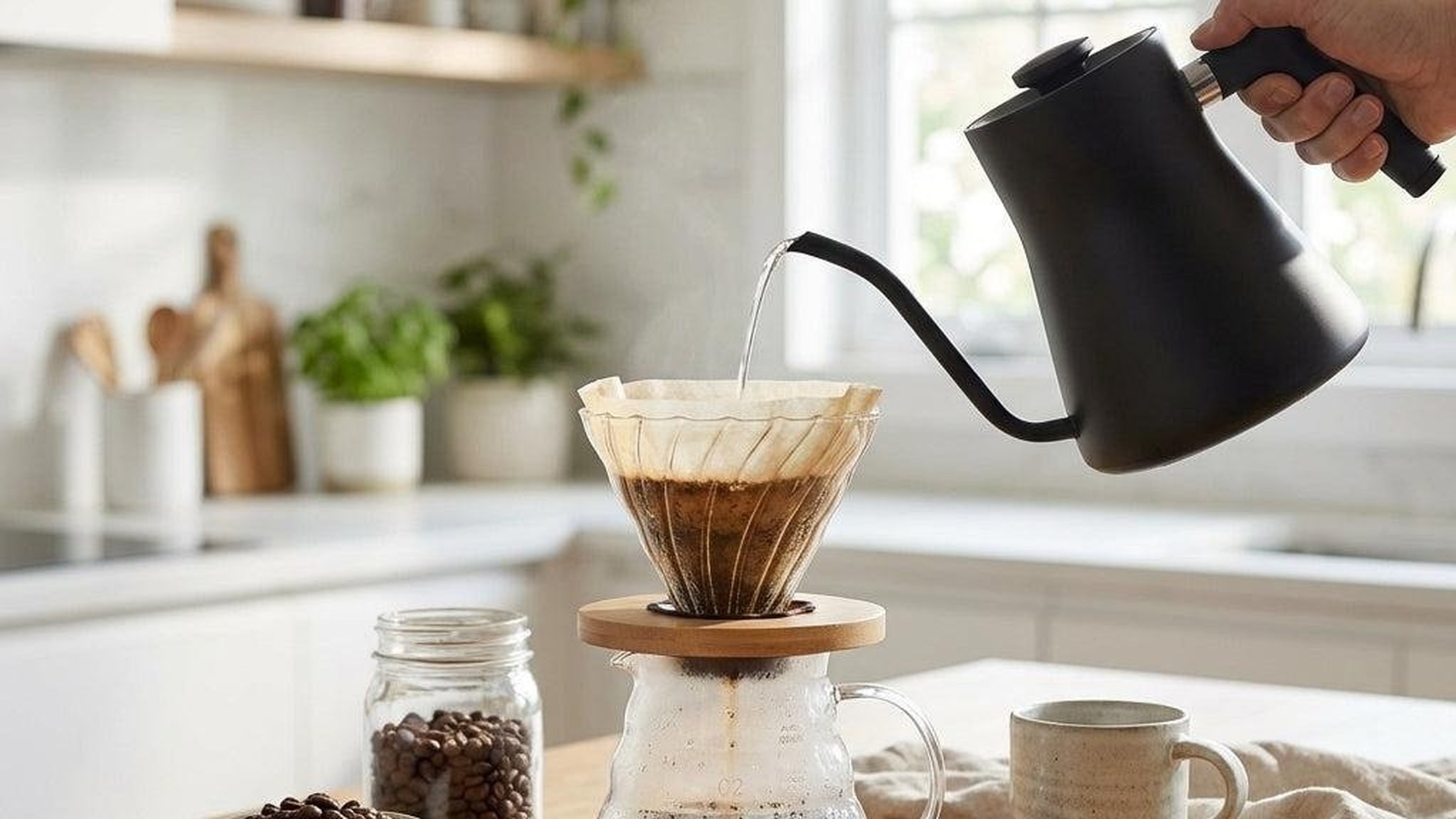
The V60 is a cone with a 60° angle and a single large hole at the bottom. Because the hole is wide, the water decides the pace — not the paper, not the machine. That is the whole secret.
The geometry
Steep walls keep the bed deep, so water stays in contact with the coffee long enough to extract sweetness instead of bitterness.
Fixed by design. You never adjust it, you work with it.
15 g of medium-fine coffee to 250 g of water.
Hot enough to extract, cool enough not to burn.
Two and a half minutes, from first drop to last.
03 · The tools
A V60 needs less than people think — and more precision than people expect. Hover any card to see what it actually does.
A ceramic cone, 60°, one hole.
Its ribs hold the paper away from the wall so air can escape — that is what makes the flow even.
Thin unbleached paper, rinsed first.
Rinsing removes the papery taste and preheats the cone. Water that cools on the way down extracts unevenly.
A thin, curved spout.
It gives you a pencil-thin stream. You aim it; you do not dump with it. Control replaces strength.
Grams, not scoops.
Coffee is a recipe, not a mood. Sixteen to one, every single time, so the only variable left is taste.
Ground medium-fine, minutes ago.
Aromatics leave the moment you grind. If the bag smells better than the cup, the grind was too early.
04 · The ritual
Hot water through the empty filter, then out. The cone is now warm and the paper taste is gone.
15 g in, shake once so the bed is flat. A flat bed extracts evenly; a mound channels water straight through.
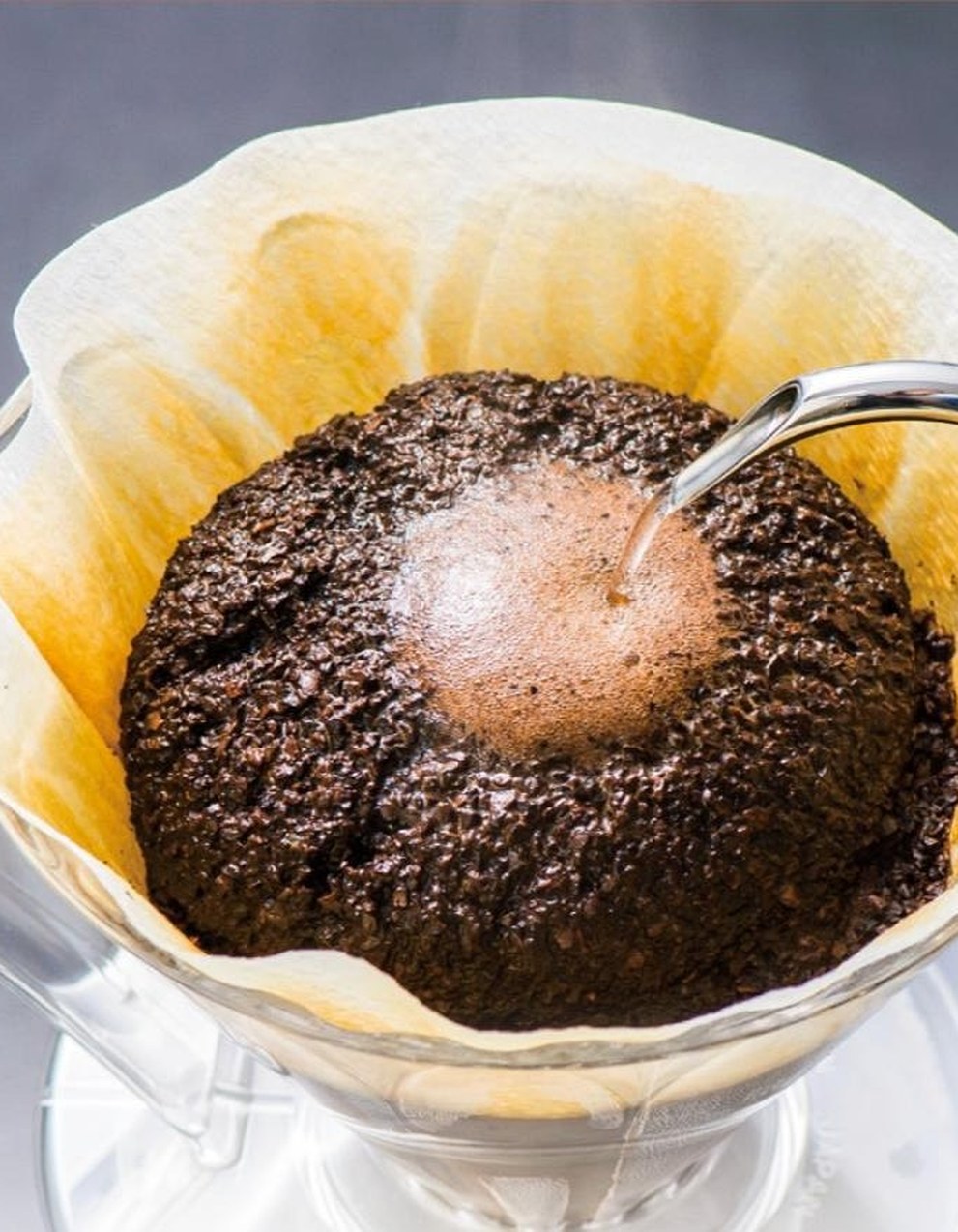
Pour 30 g, just enough to wet everything, and wait thirty seconds. The bed puffs and releases gas — this is the coffee breathing out.
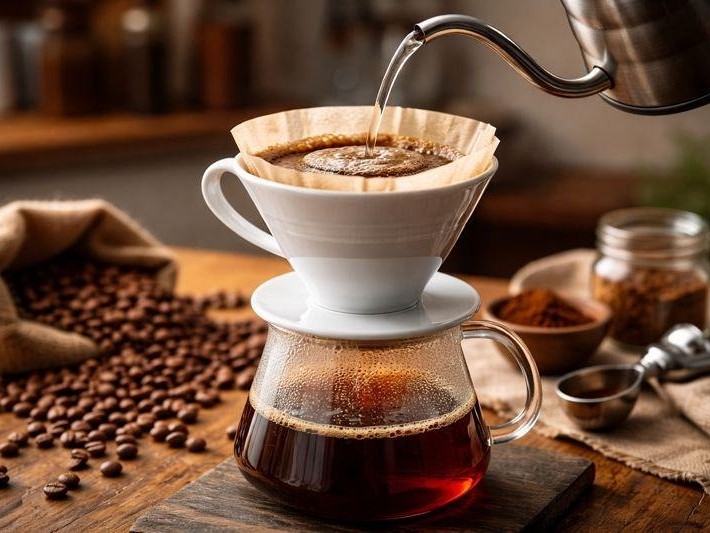
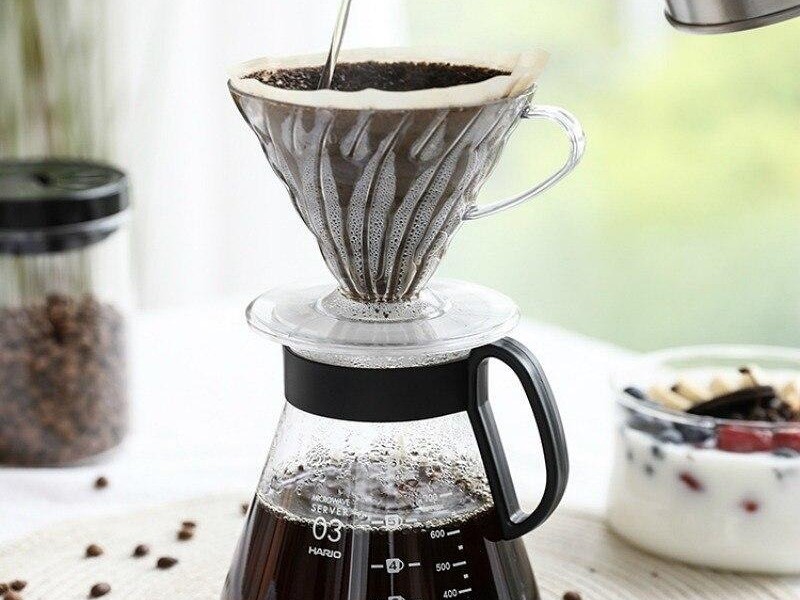
Slow spirals from the centre out, keeping the level steady, up to 250 g. Finish the pour by 02:00 and let it drain by 02:30.
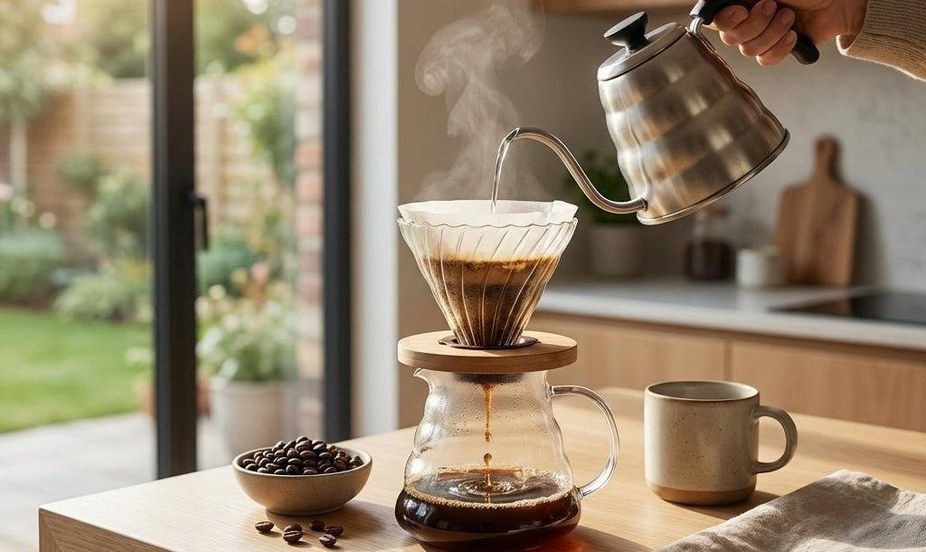
Swirl the carafe to even out the cup, wait a minute, then taste it hot, warm and cool. The flavour changes three times.
Slowness is not a delay.
It is an ingredient.
05 · Serve it
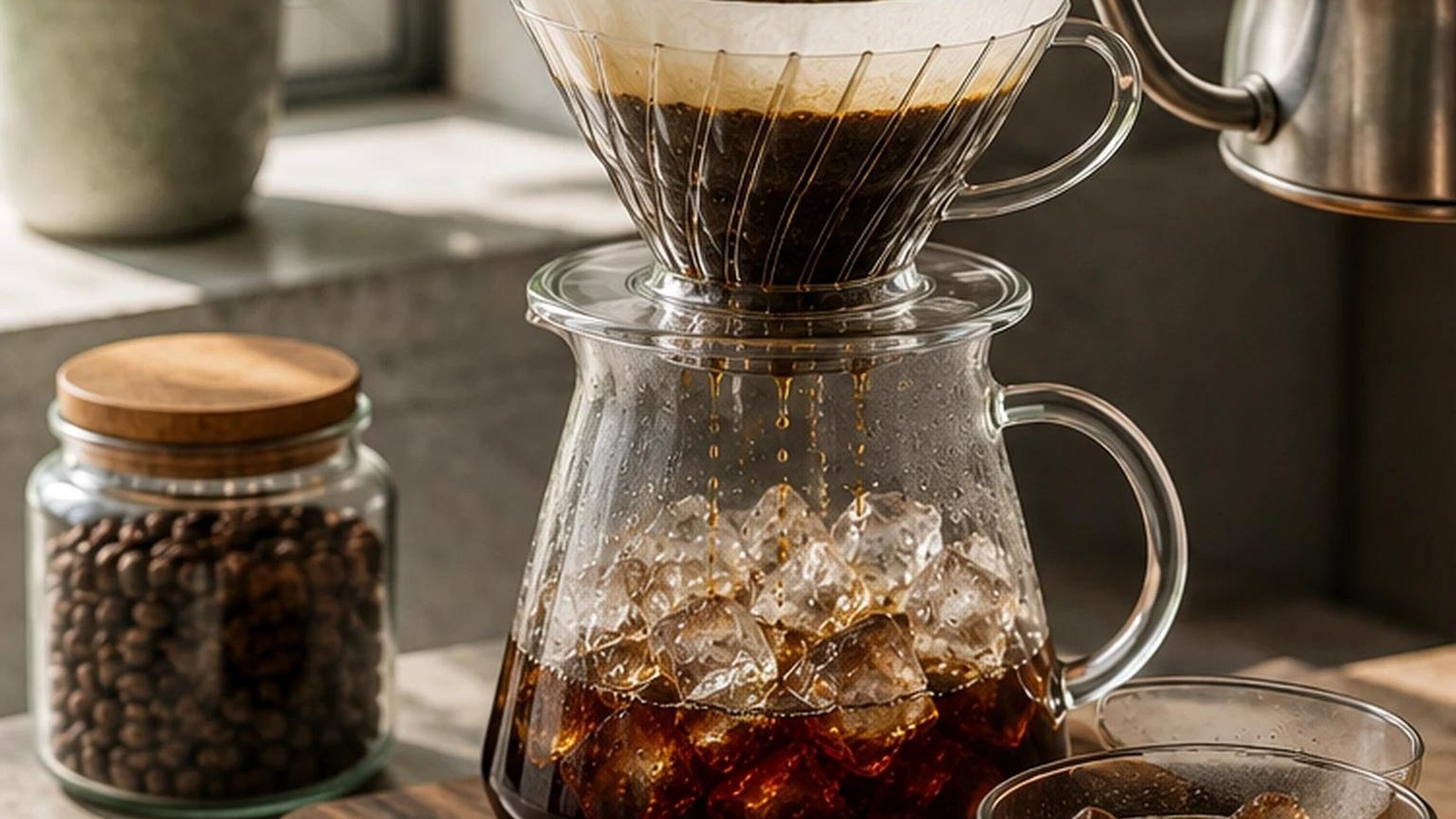
The method does not change when the weather does. Only the numbers do.
Fifteen grams, one bloom, four pours, straight into a preheated cup. Expect sweetness first, then a clean acidity, then a long finish that stays with you after the cup is empty.
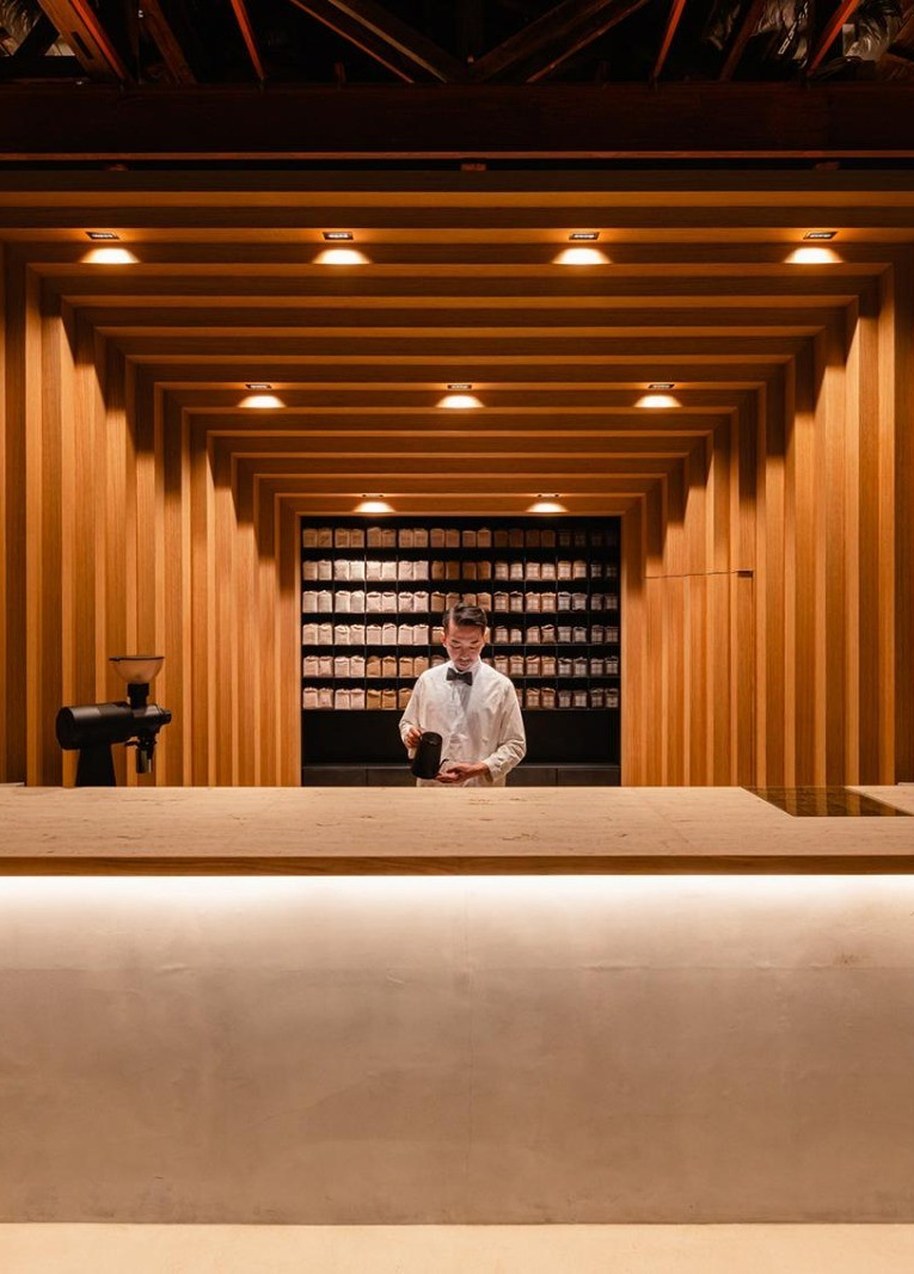
06 · At the counter
One hot V60, please.
Could you grind it medium-fine?
What single origin do you have today?
Say it slowly. The barista will meet you halfway.
07 · Quick check
08 · The finale
Twelve minutes, one cone, four pours. Everything else — the café, the counter, the conversation — is just the same ritual in a different room.
Back to the top